
Effective sludge dewatering is essential for wastewater management, reducing disposal costs and environmental impact. Anionic Polyacrylamide plays a critical role in this process by improving flocculation, accelerating water separation, and enhancing solid recovery. Understanding why this polymer is widely used helps facilities optimize their treatment systems. This article explores the benefits, mechanisms, and applications of anionic polyacrylamide in sludge dewatering.

How anionic polyacrylamide works in dewatering
Coagulation and flocculation mechanism
Anionic polyacrylamide interacts with sludge particles through charge attraction. The negative charge on the polymer binds with positively charged particles in wastewater. This process causes small particles to come together and form larger clusters called flocs.
Flocculants like anionic polyacrylamide flocculants help separate water from waste solids. The flocculation process makes it easier for water to drain away from the sludge. Operators see improved efficiency in sludge dewatering because the flocs settle quickly.
Network formation for effective sludge dewatering
Polyacrylamide polymer flocculants create a network structure within the sludge. This network traps solid particles and pushes water out. The result is a compact sludge with less water content.
Anionic polyacrylamide flocculants build strong links between particles. The network formation leads to effective sludge dewatering and reduces the volume of sludge. Polyacrylamide also improves the separation of solids from wastewater.
Operators use polyacrylamide to achieve better dewatering and manage waste more efficiently. The network structure formed by flocculants supports cost-effective sludge management. Facilities benefit from lower disposal costs and easier sludge handling.
Key benefits of anionic polyacrylamide
Enhanced water removal
Anionic polyacrylamide improves water removal from sludge by forming strong flocs. These flocculants bind particles together, which helps water drain out quickly. Operators see better turbidity removal and faster separation in wastewater treatment.
Cost-effective sludge management
Polyacrylamide reduces the cost of handling and disposing of sludge. The use of anionic polyacrylamide flocculants leads to less waste volume, which lowers transportation and landfill expenses. Many plants achieve operational savings by optimizing flocculation and dewatering processes.
- Lower disposal costs
- Reduced need for additional chemicals
- Improved plant efficiency
Reduced sludge volume
Flocculation with polyacrylamide compresses sludge into a smaller, denser mass. This process decreases the total volume of sludge that facilities must manage. Operators find it easier to store and transport sludge after dewatering.
Polyacrylamide and flocculants work together to enhance sludge dewatering. The result is a cleaner separation of solids from wastewater and more efficient waste management.
Anionic Polyacrylamide VS Other Dewatering Agents

Performance differences
Many facilities use different flocculants for sludge treatment. Common options include inorganic salts, organic coagulants, and polyacrylamide polymer flocculants. Each type works by helping particles stick together during flocculation.
Inorganic salts often require high doses and can leave behind more waste. Organic coagulants may not form strong flocs, which lowers efficiency. Polyacrylamide stands out because it forms larger, stronger flocs that settle quickly.
The table below shows a simple comparison:
| Agent Type | Dose Needed | Floc Strength | Water Removal | Cost Impact |
|---|---|---|---|---|
| Inorganic Salts | High | Weak | Moderate | Higher |
| Organic Coagulants | Moderate | Moderate | Moderate | Moderate |
| Polyacrylamide | Low | Strong | High | Lower |
Why anionic polyacrylamide is preferred
Anionic polyacrylamide offers unique benefits for wastewater treatment. It works well with many types of sludge and supports efficient flocculation. Operators choose anionic polyacrylamide flocculants because they improve water separation and reduce waste.
Polyacrylamide also lowers the total cost of sludge management. Facilities see less need for extra chemicals and enjoy easier handling. The strong network formed by polyacrylamide flocculants leads to better compaction and less volume.
Practical considerations for sludge dewatering
Dosage and optimization
Operators must determine the correct dosage of anionic polyacrylamide for each sludge type. Too much flocculant can cause poor flocculation and increase waste. Too little may result in weak flocs and low efficiency.
Testing helps find the optimal amount of polyacrylamide polymer flocculants. Facilities often use jar tests to observe floc formation and water clarity. Adjusting dosage improves dewatering and reduces chemical costs.
Compatibility with sludge types
Different sludge types respond differently to flocculants. Some sludge contains more organic matter, while others have higher mineral content. Anionic polyacrylamide works well with many sludge varieties, especially those with positive charges.
Operators should analyze sludge composition before choosing flocculants. Matching the right flocculant to the sludge type ensures strong flocculation and better water removal.
Facilities that treat mixed wastewater may need to adjust flocculant selection for each batch.
Operational tips
Operators should mix flocculants thoroughly with sludge to achieve even distribution. Proper mixing speeds up flocculation and improves results.
Regular equipment maintenance prevents blockages and ensures smooth operation. Monitoring water clarity and sludge volume helps track performance.
Training staff on flocculant handling and dosing supports consistent dewatering outcomes.
A focus on dosage, compatibility, and operational methods helps facilities maximize the benefits of anionic polyacrylamide flocculants. These steps support effective sludge management and reliable wastewater treatment.
Results of using anionic polyacrylamide
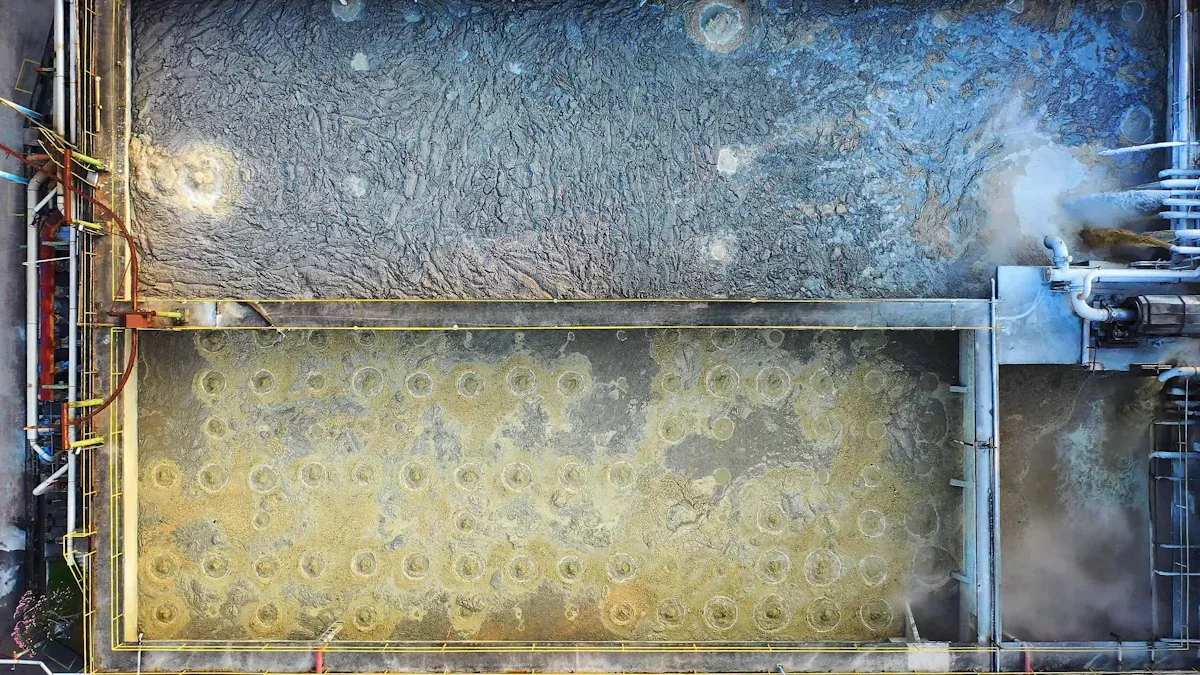
Improved dewatering efficiency
Anionic polyacrylamide helps facilities achieve higher efficiency in sludge treatment. Operators observe faster water separation when they use these flocculants. The flocculation process creates larger flocs, which settle quickly and allow water to drain from sludge.
Facilities often report that polyacrylamide improves the clarity of wastewater. The strong network formed by flocculants reduces the amount of water trapped in sludge. This leads to a more compact mass and less waste for disposal.
Operational outcomes
Operators experience easier handling and transportation of sludge after dewatering. The use of flocculants like polyacrylamide lowers disposal costs and supports better plant operations. Facilities spend less on chemicals because flocculation with anionic polyacrylamide requires lower doses.
A table below highlights key operational outcomes:
| Outcome | Description |
|---|---|
| Reduced sludge volume | Less space needed for storage |
| Lower disposal costs | Fewer trips to landfill |
| Improved water clarity | Cleaner wastewater output |
Staff find that regular monitoring and proper dosing of flocculants lead to consistent results. Plants benefit from reliable dewatering and more efficient waste management. The overall process becomes simpler and more cost-effective.
Anionic polyacrylamide supports enhanced efficiency in water treatment for wastewater, sewage, and industrial wastewater. Facilities use this solution to improve water removal, reduce sludge volume, and lower waste disposal costs in wastewater treatment and sewage treatment. Operators see reliable results in water treatment for sewage, industrial wastewater, and waste management.
- Water treatment with anionic polyacrylamide helps facilities achieve cleaner water and more effective waste management.
- Industrial wastewater and sewage treatment plants report improved water treatment outcomes and reduced waste.
- Water treatment professionals recommend anionic polyacrylamide for consistent results in wastewater, sewage, and industrial wastewater processes.
Conclusion
In summary, Anionic Polyacrylamide is a highly effective solution for sludge dewatering, offering faster water separation, improved solid recovery, and reduced disposal costs. Its practical benefits make it an essential tool for wastewater treatment facilities aiming to enhance efficiency and environmental compliance. By understanding and applying this polymer correctly, operators can achieve more reliable and cost-effective sludge management, reinforcing its role as a vital component in modern dewatering processes.


