
Anionic Polyacrylamide Uses span a wide range of industries, from wastewater treatment to mining and agriculture. This versatile polymer helps improve solid–liquid separation, enhance flocculation, and reduce turbidity, making processes more efficient and cost-effective. Understanding its key applications and benefits can help you choose the right solution for your specific needs. In the sections below, we’ll explore the main uses and advantages in detail.

What Is Anionic Polyacrylamide?
Definition and Properties
Anionic polyacrylamide is a synthetic polymer. It contains negatively charged groups along its chain. These charges help it interact with particles in liquids.
This compound appears as a white powder or granules. It dissolves easily in water, forming a clear solution.
The molecular weight of anionic polyacrylamide can vary. Higher molecular weights often improve its effectiveness in industrial processes.
Note: The negative charge makes anionic polyacrylamide different from other types of polyacrylamide. This property allows it to target specific contaminants.
Anionic polyacrylamide is stable under normal conditions. It does not react with most chemicals found in water treatment or mining.
It is non-toxic when used as directed. This makes it suitable for many environmental applications.
How It Works
Anionic polyacrylamide works by attracting and binding suspended particles. The negative charges on its chain pull together small particles in water.
This process is called flocculation. Flocculation helps form larger clumps, or flocs, that settle out of the liquid.
Industries use anionic polyacrylamide to clarify water, separate solids, and improve filtration.
Key Steps in Flocculation:
-
- Anionic polyacrylamide is added to the liquid.
- The polymer chains attach to particles.
- Flocs form and settle, making the liquid clearer.
Polyacrylamide can also act as a thickener. It increases the viscosity of solutions, which helps control flow and improve processing.
In soil conditioning, anionic polyacrylamide binds soil particles. This reduces erosion and improves soil structure.
| Application | Benefit |
|---|---|
| Water treatment | Improved clarity |
| Mining | Enhanced dewatering |
| Agriculture | Better soil stability |
Anionic Polyacrylamide Applications
Water Treatment and Wastewater
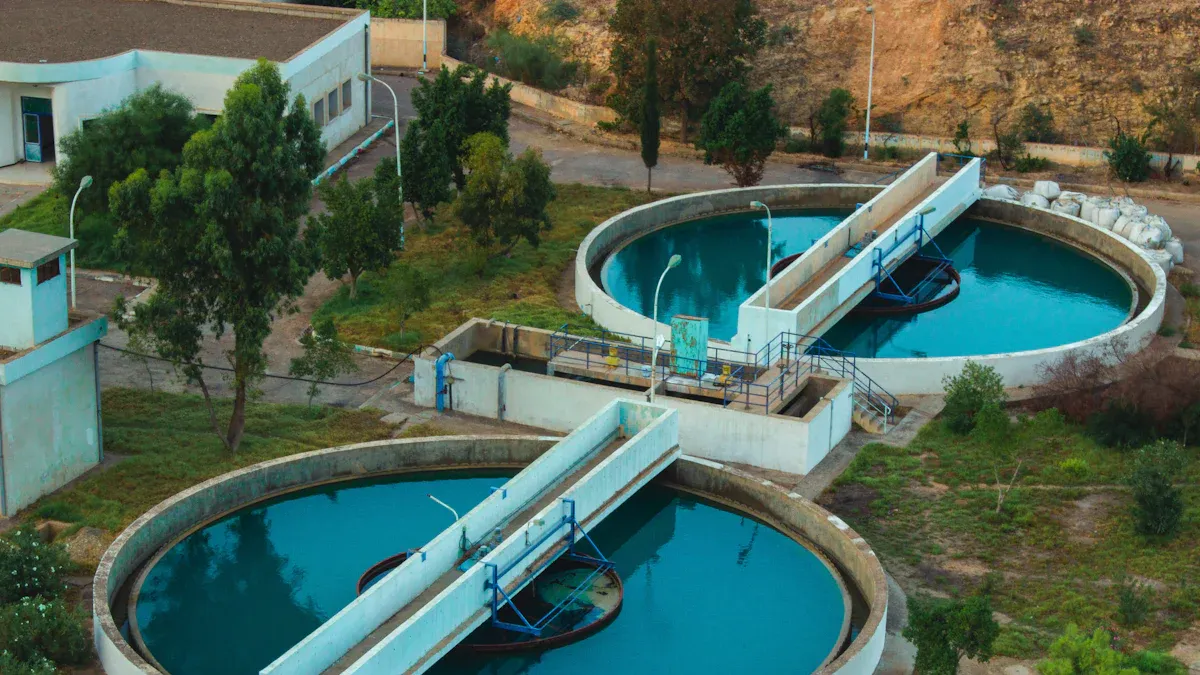
Anionic polyacrylamide plays a vital role in water treatment and wastewater management. It acts as a flocculant in municipal and industrial wastewater treatment. This water-soluble polymer helps remove suspended solids and organic matter from water.
The flocculation process binds fine particles together, forming larger flocs that settle quickly. This improves water clarity and supports solid-liquid separation. Many water treatment processes rely on anionic emulsion polyacrylamide for high flocculation efficiency.
In wastewater treatment processes, APAM enhances sludge dewatering. It reduces the volume of sludge and lowers disposal costs. Improved water quality results from the removal of contaminants.
Tip: Using anionic polyacrylamide in industrial water treatment can help meet environmental regulations and protect ecosystems.
Mining Industry
The mining industry uses anionic emulsion polyacrylamide for several applications. It supports mineral processing by aiding in flocculation and dewatering. This polymer helps separate valuable minerals from waste material.
Sludge dewatering is essential in mining operations. Anionic polyacrylamide improves the efficiency of this process. It also reduces water usage and minimizes environmental impact.
Operators choose polyacrylamides for their strong flocculation performance. These polymers help achieve better solid-liquid separation. The result is cleaner water and reduced waste.
Oil and Gas
Anionic emulsion polyacrylamide is important in oil and gas applications. It is used for enhanced oil recovery and drilling fluid treatment. The polymer increases the viscosity of fluids, which helps control flow during drilling.
In enhanced oil recovery, polyacrylamide improves the movement of oil through rock layers. This leads to higher extraction rates. The flocculant properties also help treat produced water by removing suspended solids.
Operators value anionic polyacrylamide for its versatility. It supports both production and wastewater treatment in oil and gas fields. The result is more efficient operations and improved water management.
Paper and Pulp
The paper manufacturing industry relies on anionic emulsion polyacrylamide for many applications. It acts as a retention aid and drainage agent during paper production. The polymer helps bind fibers and fillers, improving sheet formation.
Polyacrylamides enhance dewatering on paper machines. This leads to faster production and lower energy use. The flocculation process also improves the quality of the final paper product.
Note: Using anionic polyacrylamide in paper and pulp applications can reduce chemical consumption and improve process efficiency.
Agriculture and Soil Conditioning
Anionic emulsion polyacrylamide is widely used in agriculture for soil conditioning. It binds soil particles together, reducing erosion and runoff. This improves soil structure and increases water retention.
Farmers use polyacrylamides to enhance water retention in fields. This helps crops survive during dry periods. The polymer also supports better seed germination and root growth.
In agricultural applications, anionic polyacrylamide promotes sustainable farming. It protects water resources by preventing soil loss. The result is healthier crops and improved land productivity.
Benefits of Anionic Polyacrylamide

Efficiency and Performance
Anionic polyacrylamide improves process efficiency in many industries. It helps separate solids from liquids quickly. Operators see faster settling times and clearer water.
The polymer increases the effectiveness of filtration systems. It reduces the need for repeated treatments. Many facilities report higher throughput and better product quality.
Using anionic polyacrylamide can lead to more reliable results in water treatment and mining operations.
Cost and Environmental Impact
Companies choose anionic polyacrylamide because it lowers operating costs. The polymer reduces chemical usage and energy consumption. Less sludge means lower disposal expenses.
Environmental impact is another important factor. Anionic polyacrylamide supports cleaner water discharge. It helps meet environmental standards and protects local ecosystems.
| Cost Factor | Impact |
|---|---|
| Chemical savings | Lower expenses |
| Energy efficiency | Reduced consumption |
| Waste reduction | Less landfill use |
Versatility in Applications
Anionic polyacrylamide offers key benefits across different industries. It works in water treatment, mining, oil and gas, paper production, and agriculture. The polymer adapts to various process needs.
Farmers use it to improve soil structure and reduce erosion. Paper mills rely on it for better fiber retention. Mining sites benefit from enhanced dewatering and cleaner water.
- Water treatment plants
- Mining operations
- Oil and gas fields
- Paper mills
- Agricultural fields
Conclusion
Anionic Polyacrylamide Uses provide a practical solution for improving solid–liquid separation, enhancing flocculation, and reducing turbidity across water treatment, mining, oil and gas, paper, and agriculture. By increasing process efficiency, lowering chemical and energy costs, and supporting environmental compliance, APAM delivers measurable operational and sustainability benefits. For industries facing water and soil challenges, it remains a reliable, high-impact choice that drives better results and cleaner outcomes.


